CONCRETE DRIVEWAYS TOOWOOMBA
New concrete driveways, replacements, acreage access areas and shed approaches for residential, rural and commercial properties across Toowoomba.
Concrete Driveways for Toowoomba Homes, Acreage & Commercial Properties
A driveway needs to do more than provide a strip of concrete between the street and the garage. Its width, slope, turning space, drainage and connection points all affect how comfortably it can be used and how well it performs over time.
Some Toowoomba properties require a straightforward residential driveway from the kerb to a garage. Others need additional parking, access beside the house, a wider approach for trailers or a longer driveway leading to a shed. Established properties may also have an older driveway that is cracked, uneven or no longer suits the way the property is used.
Toowoomba Concreter constructs new and replacement driveways for properties across Toowoomba and the surrounding Darling Downs, with each project planned around the site rather than treated as a standard one-size-fits-all pour.
Concrete Driveway Work for Different Property Needs
New Residential Driveway Builds
New driveways can be constructed for completed homes, new builds and properties where vehicle access is being redesigned. The layout can include the main garage approach, side access, parking bays or a connection to another concrete area.
Replacement Concrete Driveways
An ageing driveway may have widespread cracking, poor drainage or an outdated layout. Replacement provides an opportunity to remove the failing or unsightly concrete, correct underlying issues and build a driveway that better suits current needs.
Driveway Extensions & Extra Parking
Concrete can be added beside an existing driveway to create more parking, improve access to a second garage or provide additional room for trailers and larger vehicles. Existing levels and drainage need to be checked before the extension is designed.
Acreage, Shed & Light-Commercial Access
Rural blocks and commercial properties may require longer driveway sections, wider turning areas or a durable entrance to a workshop or utility shed. Additional reinforcements and a thicker slab may also be required to accommodate larger vehicles.
Driveway Design Decisions to Make Before Concrete Is Poured
The most important driveway decisions are often made before excavation begins. A driveway that is too narrow, poorly aligned or built without enough turning room can remain inconvenient regardless of how good the finished concrete looks.
The proposed layout should account for:
- The number and type of vehicles regularly using the driveway
- Comfortable entry and exit from the street
- Garage door position and the angle of approach
- Room for trailers, utes, caravans or work vehicles
- Gradients between the road, driveway and garage floor
- Water flow away from buildings and low points
- Access to gates, sheds and side parking areas
- Connections with existing concrete and landscaping
- Safe pedestrian movement between the driveway and house
Where the driveway also functions as the main walking route to an entry, dedicated concrete paths around the home may create a cleaner and safer connection than relying entirely on the vehicle area.
Work close to the kerb, footpath or crossover also needs to be planned around existing levels and any applicable council requirements.
Building a Stable Base for Vehicle Traffic
The appearance of a driveway is determined at the surface, but much of its long-term performance depends on what happens underneath it.
Preparation requirements vary between sites. An existing driveway may need to be broken up and removed, while a new driveway may require excavation through lawn, soil or an old gravel access. Soft areas, unsuitable material and variations in ground level need to be addressed before the concrete is placed.
Excavation Planning & Levels
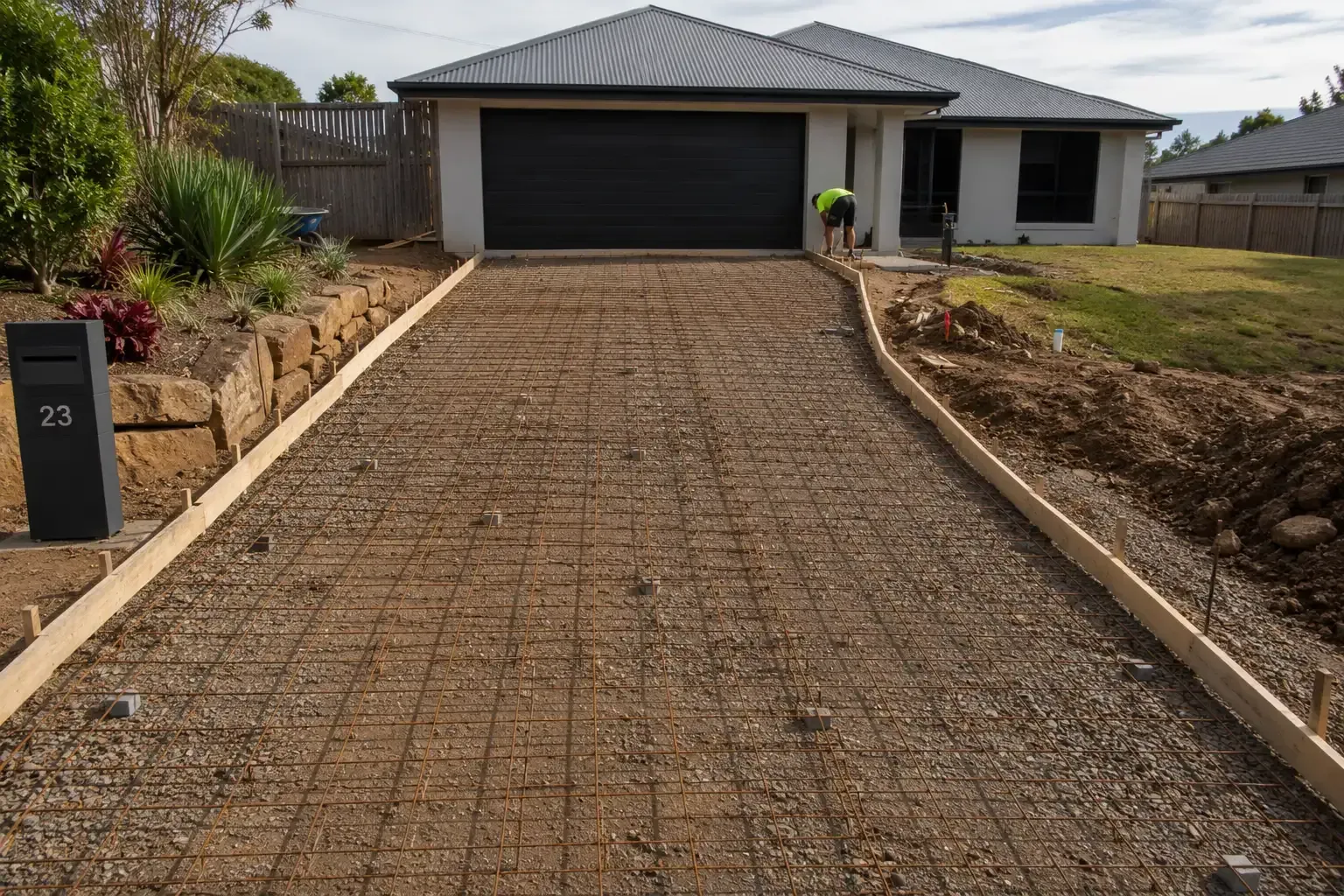
Before the concrete is poured, a lot of preparation and planning is required to ensure consistent quality. The driveway area is excavated to allow for the compacted base and concrete thickness. Levels are established around the garage, street, adjoining paths and drainage points before formwork is installed.
Base Placement & Compaction
A solid base is essential for reliable support and load distribution. It must be carefully selected and compacted for stability and to prevent cracking over time. Thorough compaction is vital for durability, so investing time in a strong foundation enhances the performance and resilience against future stresses.
Reinforcement & Joint Planning
Reinforcement, concrete thickness, and control joints are selected based on the driveway's intended use. A residential driveway for passenger vehicles differs from a commercial area for heavy trailers or machinery. Proper planning significantly improves functionality and lifespan, ensuring it effectively meets the users' needs.
Falls & Water Movement
The surface must be designed to direct water away from the garage and other structures, allowing rain to flow freely and avoid pooling. Drainage considerations often significantly influence the design. Effective drainage can prevent structural damage and improve functionality for years to come.
Choosing a Suitable Concrete Driveway Finish
A driveway finish should suit the home, the expected traffic and the amount of maintenance the owner is comfortable with. Decorative appearance matters, but grip, durability and how the finish will look across a large area are equally important.
Plain Concrete Driveway Finish
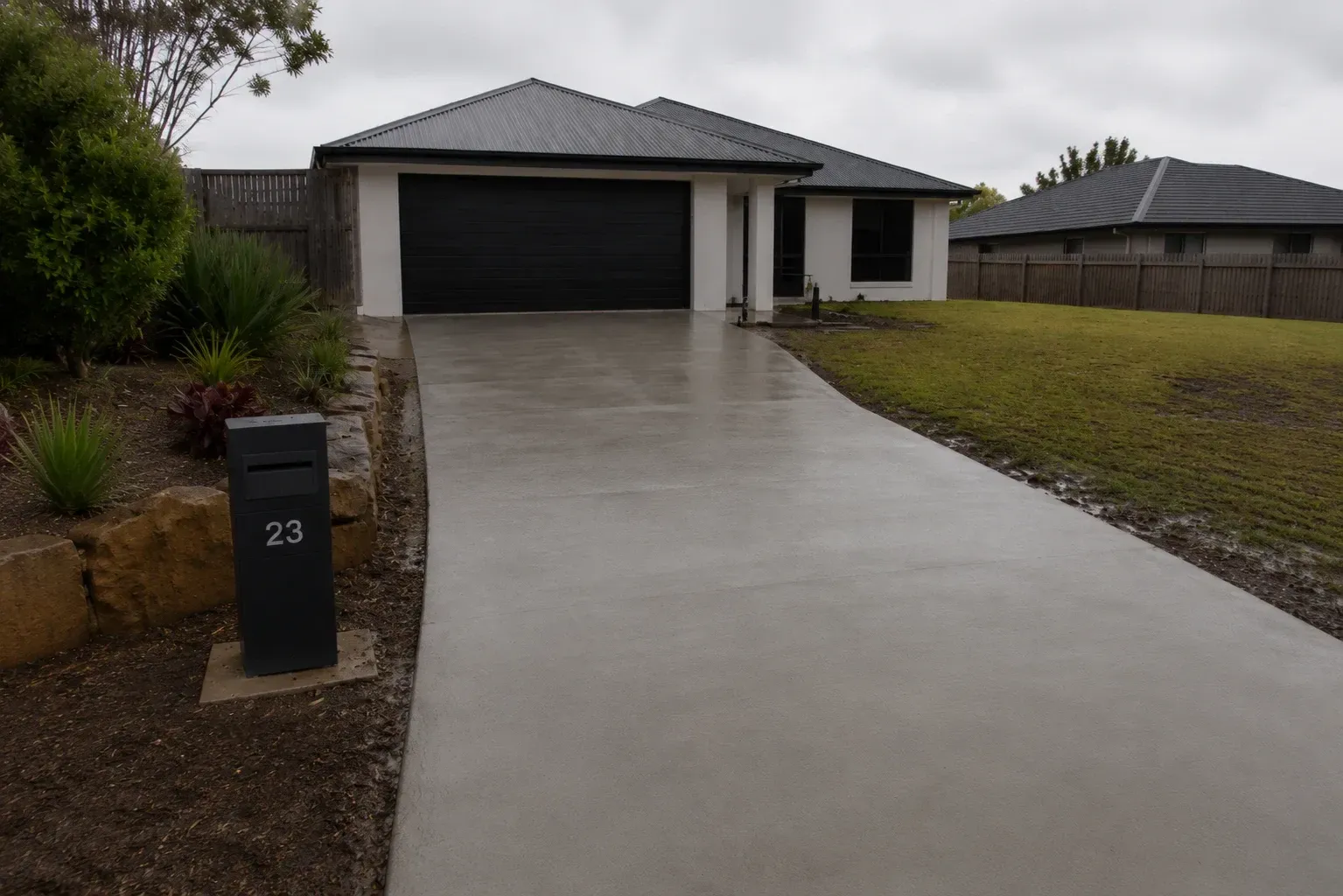
Plain concrete is a practical option for driveways, shed approaches and working areas where functionality is the main priority. The surface can still be textured to provide grip and a clean, consistent appearance.
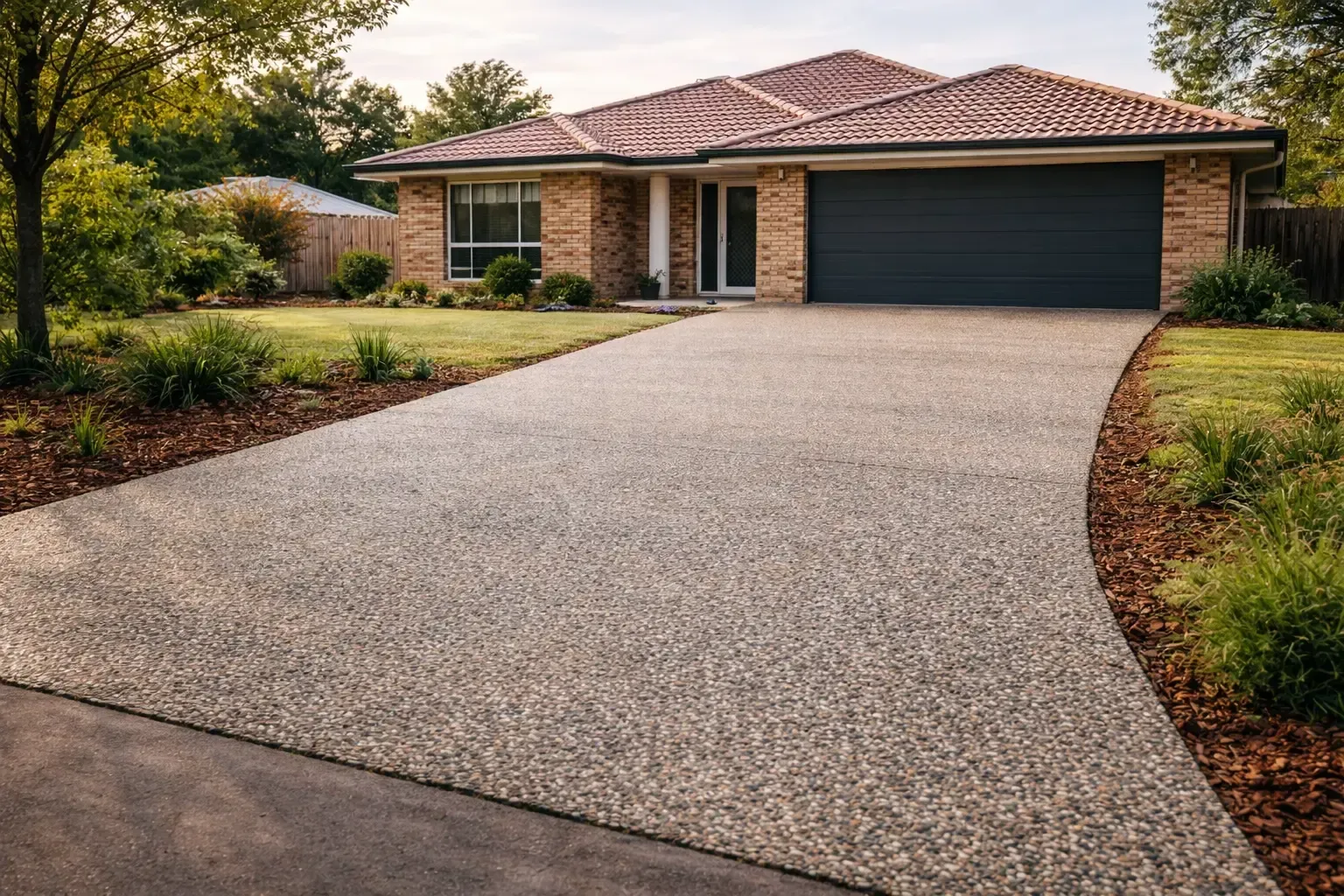
Exposed Aggregate Driveways
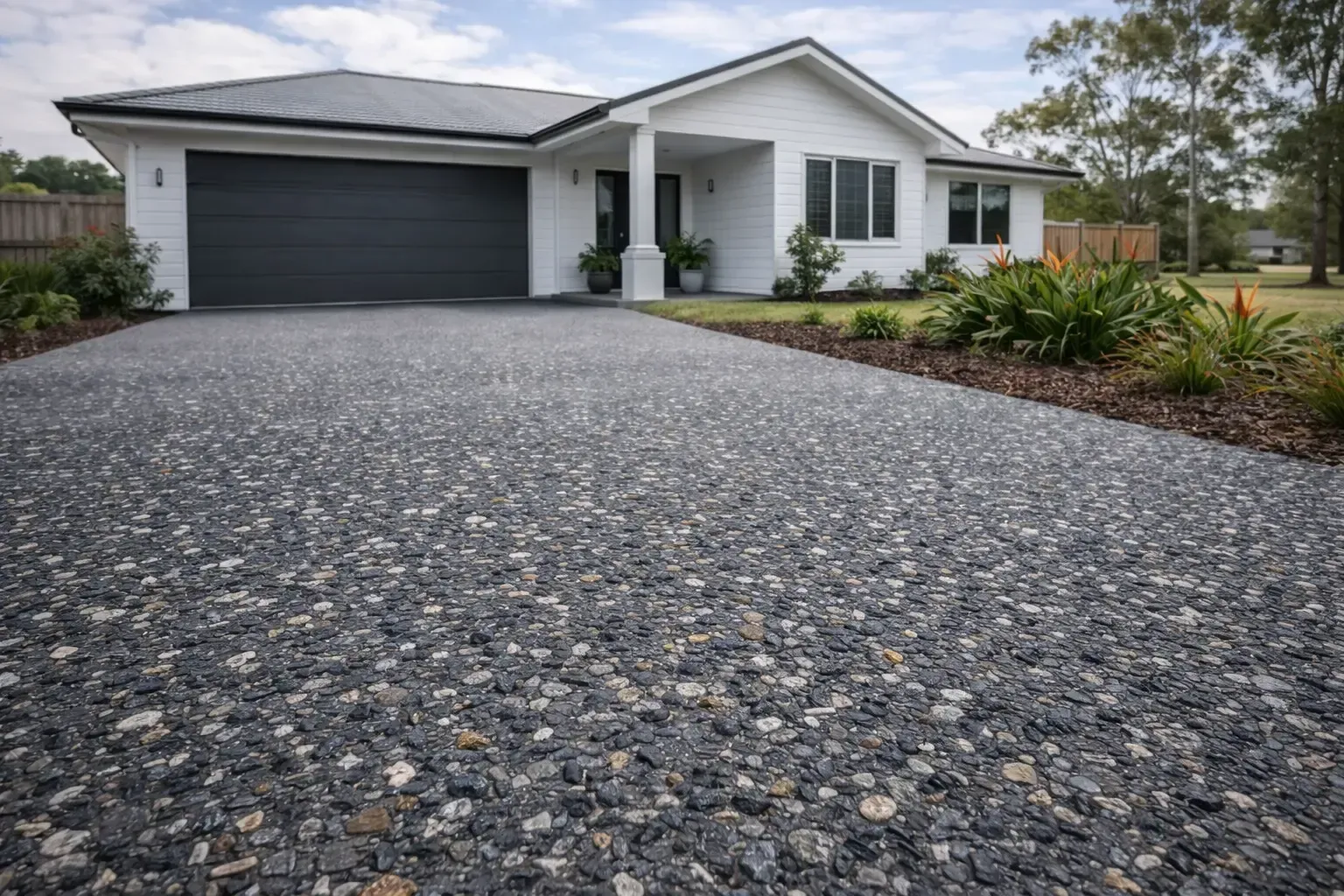
Exposed aggregate adds colour, grip and texture while remaining suitable for regular vehicle traffic. Aggregate selection can help the driveway complement brickwork, roofing, landscaping and other exterior finishes.
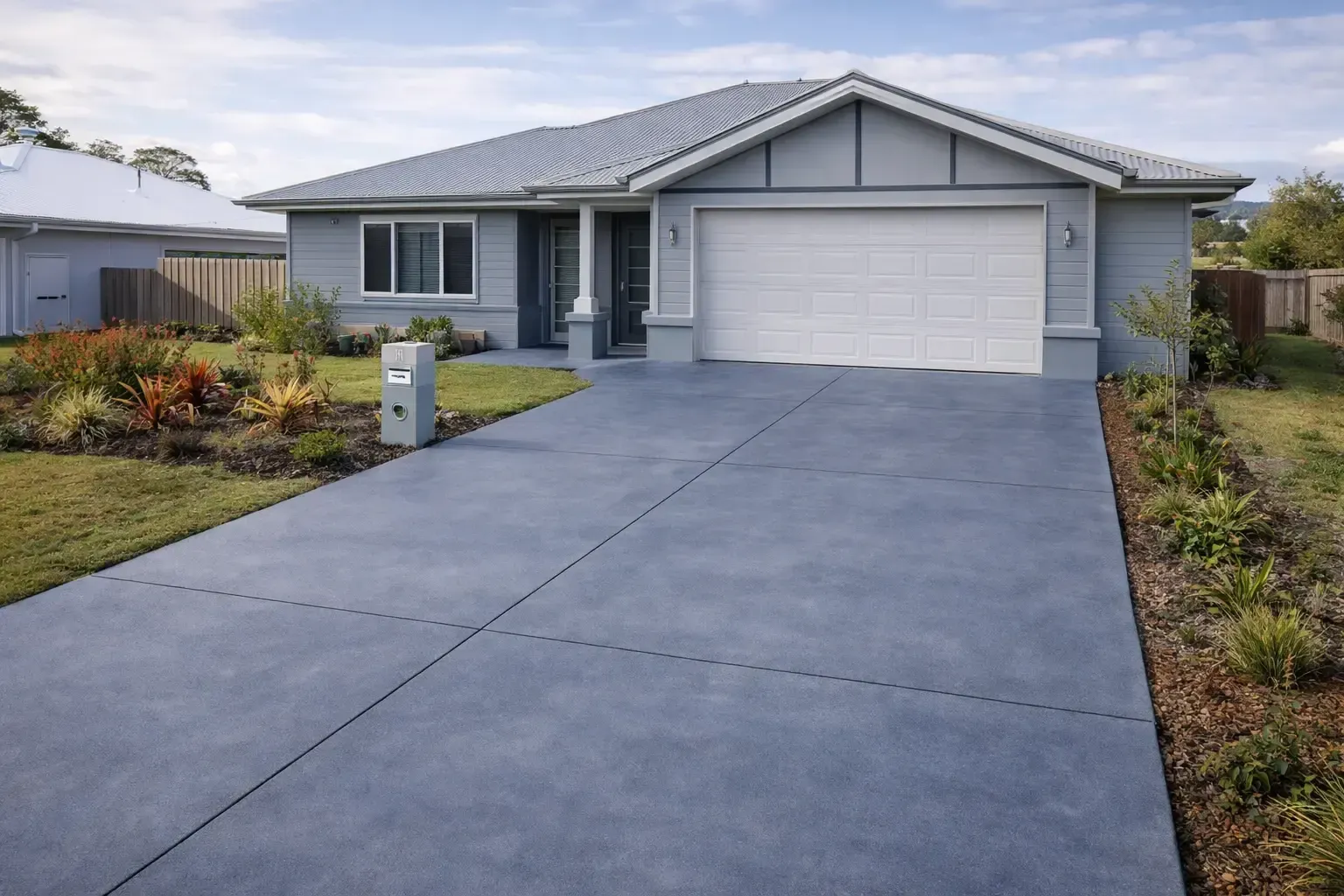
Coloured or Stencilled Concrete
Integral colour and stencilled finishes can give a driveway more visual appeal. Colour choice should consider the house, surrounding concrete, likely staining and how the finish will look across the full driveway area.
Our decorative concrete finishes page provides a more detailed comparison of exposed aggregate, coloured and stencilled options for driveways and other outdoor areas.
A Replacement Driveway Should Address More Than the Surface
Replacing a driveway is not simply a matter of pouring new concrete in the same position. The condition of the old driveway can reveal problems that should be corrected before the replacement is built.
These may include:
- Sections that have settled or lifted
- Water collecting near the garage or house
- Cracking caused by movement beneath the concrete
- Poor transitions between the street and driveway
- An approach that is too narrow for current vehicles
- Awkward joins created by previous extensions
- Insufficient room for parking or turning
- Tree roots or damaged ground near the driveway edge
Once the old concrete has been removed, the exposed area can be assessed and prepared for the new driveway. This is also the best time to reconsider the width, alignment, drainage and connection with paths, gates or parking areas.
Where part of the existing driveway is being retained, the new section needs to meet it at a workable level. Differences in age, finish and colour should also be considered before deciding between a partial extension and complete replacement.
Driveways Beyond the Standard Suburban Block
Not every driveway follows a short, level line from the street to a front garage. Toowoomba and the surrounding Darling Downs include sloping residential blocks, acreage homes, rear sheds and properties where vehicles need to travel further into the site.
Driveways on Sloping Properties
Slope affects vehicle clearance, water movement and the transition into garages or parking areas. Changes in gradient need to be gradual enough for the vehicles using the driveway, particularly where there are low cars, trailers or longer vehicles.
Steeper driveways may also require additional attention around surface grip, drainage and water entering from adjoining ground.
Acreage Driveways & Turning Areas
A larger property requires a wider driveway for easy vehicle passage and turns, reducing long reversing distances that can be hazardous. The design should meet residents' needs for smooth movement and consider practical aspects like deliveries and service vehicles.
Addressing these factors will enhance functionality and safety, creating a more efficient and pleasing result.
Concrete Approaches to Sheds & Workshops
A concrete approach can provide cleaner and more reliable access immediately outside a garage, workshop or machinery shed. This page covers the vehicle approach and driveway connection; the slab and building itself remain part of our shed slab and shed construction services.
More info on larger agricultural traffic areas, livestock shed floors, machinery hardstands and other farm infrastructure can be found on our rural concreting across the Darling Downs.
Questions About New & Replacement Driveways
How thick should a residential concrete driveway be?
Most standard residential driveways are poured at approximately 100 mm thick with steel reinforcement over a properly compacted base. Areas expected to carry heavier vehicles, caravans, loaded trailers or machinery may need to be increased to around 125–150 mm, depending on the site and expected loads.
How long before I can drive on a new concrete driveway?
Passenger vehicles should generally be kept off a new concrete driveway for at least seven days. Heavier vehicles should be left longer, usually 10–14 days. Concrete continues gaining strength for several weeks, so the driveway should not be subjected to unnecessary heavy loads during the early curing period.
Can an existing driveway be widened?
Yes. A driveway can usually be widened to create additional parking, improve access to a garage or provide more room for trailers and larger vehicles. The new section needs its own properly compacted base and reinforcement, and it should be dowelled or otherwise connected to the existing slab where appropriate. Drainage and the difference in colour between old and new concrete also need to be considered.
Can you remove the old driveway before pouring the replacement?
Yes. A full replacement normally involves breaking up and removing the existing concrete, excavating any unsuitable material, rebuilding and compacting the base, installing formwork and reinforcement, and then pouring the new driveway. Replacing the full driveway also makes it easier to correct poor levels, drainage problems and awkward previous extensions.
Is plain concrete suitable for a driveway?
Yes. Plain concrete is one of the most practical and cost-effective driveway finishes. It provides a durable surface for regular vehicle traffic and can be finished with a light broom texture for grip. Exposed aggregate, coloured and stencilled concrete are mainly chosen when a more decorative appearance is wanted.
What is the best concrete finish for a sloping driveway?
A broom-finished plain concrete or textured exposed aggregate surface is usually the better option for a sloping driveway because both provide more grip than a smooth finish. Highly polished or overly smooth finishes should be avoided on vehicle areas, particularly where the driveway may be wet.
Will a new concrete driveway crack?
Concrete can develop minor shrinkage cracking as it cures, but correct base preparation, reinforcement and properly positioned control joints significantly reduce the risk of uncontrolled cracking. No contractor can honestly guarantee that concrete will never crack, but good preparation and joint planning help ensure any movement occurs in the intended locations.
Can a driveway continue through to a backyard shed?
Yes. A driveway can be extended past the house to a rear garage, workshop or shed, provided there is enough width and suitable access. The route should be designed around vehicle turning, gate openings, drainage, boundary setbacks and the weight of the vehicles that will use it.
Do concrete driveways need control joints?
Yes. Control joints are essential because they create planned weak points where the concrete can shrink and move as it cures. Without them, cracks are more likely to form randomly across the driveway. Joint spacing and placement should be planned around the driveway width, changes in shape and connection points.
Does a concrete driveway need to be sealed?
Plain concrete does not have to be sealed, although sealing can make cleaning easier and help reduce staining. Decorative finishes such as exposed aggregate, coloured and stencilled concrete are more commonly sealed to enhance the colour and provide additional surface protection. Sealers will wear over time and may need to be reapplied.
How Driveway Work Varies Across Toowoomba
The type of driveway work required often changes with the property.
In established suburbs such as Newtown, Harristown and Rangeville, the project may involve replacing an older cracked driveway, widening a narrow garage approach or improving drainage around existing structures.
Properties around Glenvale, Kearneys Spring and Mount Lofty may require new driveways, side access or additional concrete parking as homes and outdoor areas are completed.
Larger blocks around Highfields, Westbrook, Cotswold Hills and the edges of Toowoomba may need longer vehicle access, shed approaches or more room for trailers and turning movements.
These are examples rather than the limits of our coverage. The areas we service around Toowoomba page provides further information about work across the city and surrounding Darling Downs, Lockyer Valley, Southern Downs, Western Downs & Somerset Regions.
Planning a New or Replacement Concrete Driveway?
Fill in the form below to arrange a free quote! 👇
Contact Us
We will get back to you as soon as possible.
Please try again later.